


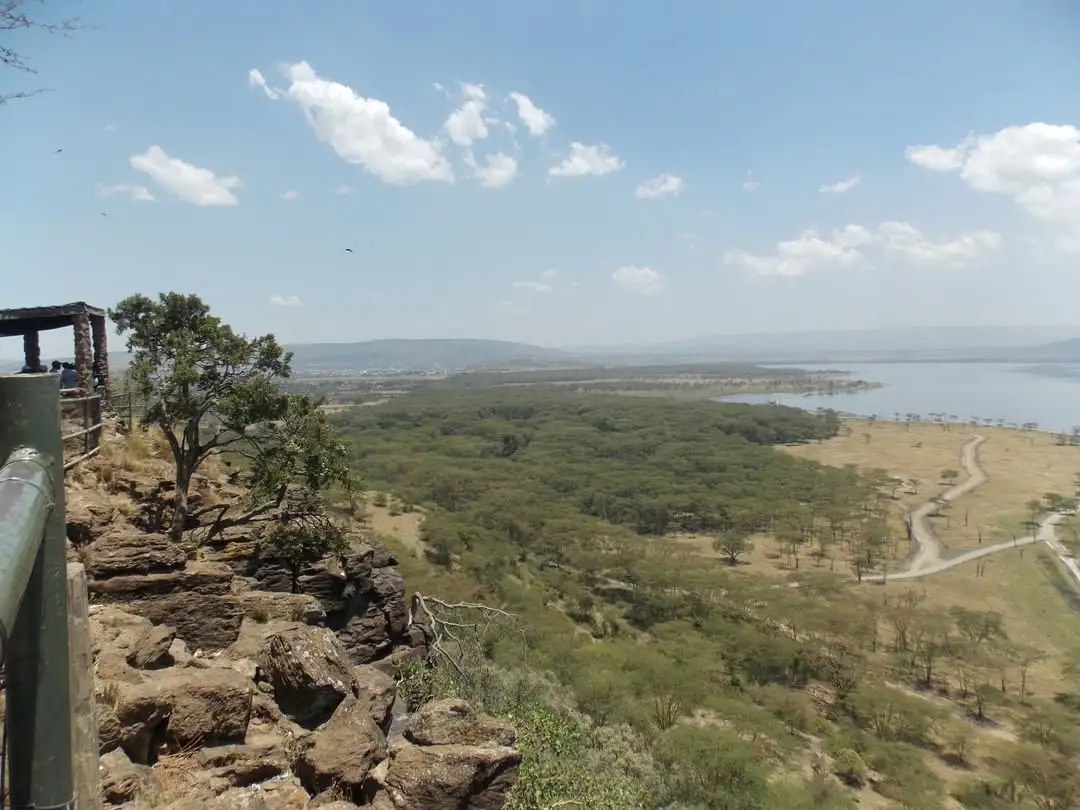
The park covers approximately 188 square kilometers and is framed by wooded and bushy grasslands, rocky escarpments and lakeshore wetlands. This creates a rich ecological mix despite the park's relatively compact size.
The lake itself is shallow and alkaline, creating ideal conditions for algae growth that attracts flamingos and other water birds. Around it, visitors move through open grasslands, euphorbia forest, acacia woodland and elevated viewpoints that overlook the full basin.
That diversity of habitats is one of the reasons Lake Nakuru remains such a rewarding destination. It offers a blend of birdlife, large mammals, scenic geology and manageable driving distances that work especially well for short safari itineraries.
